Data centers are becoming an ever-increasing focus both because of their impacts to communities and ratepayers and because candidates are having to answer to voters on this issue with the midterm elections weeks away. This is the first in a series of blogs that will look at data centers in California, both existing and proposed, to discuss the current state of data centers and the future impacts of proposed data centers from a land use and energy perspective. This discussion will also speak to how the state prepares for load growth and whether this minimizes most risk from large load data centers. The series will also analyze recent legislation specific to data center construction where the state seeks to insulate non-data center ratepayers from the interconnection, electric supply, and transmission cost caused by new data centers. It will then analyze the current state of local government moratoriums (permanent and temporary) to provide information on and to what purpose these moratoriums serve. These blogs are intended to help set the stage for one of the main issues that will be front and center at our November 6, 2026, 18th Annual Lesley K. McAllister Symposium on Climate and Energy Law where the topic is Powering the Future: Navigating the Impact of AI Data Centers and Electrification. You can register to attend HERE.
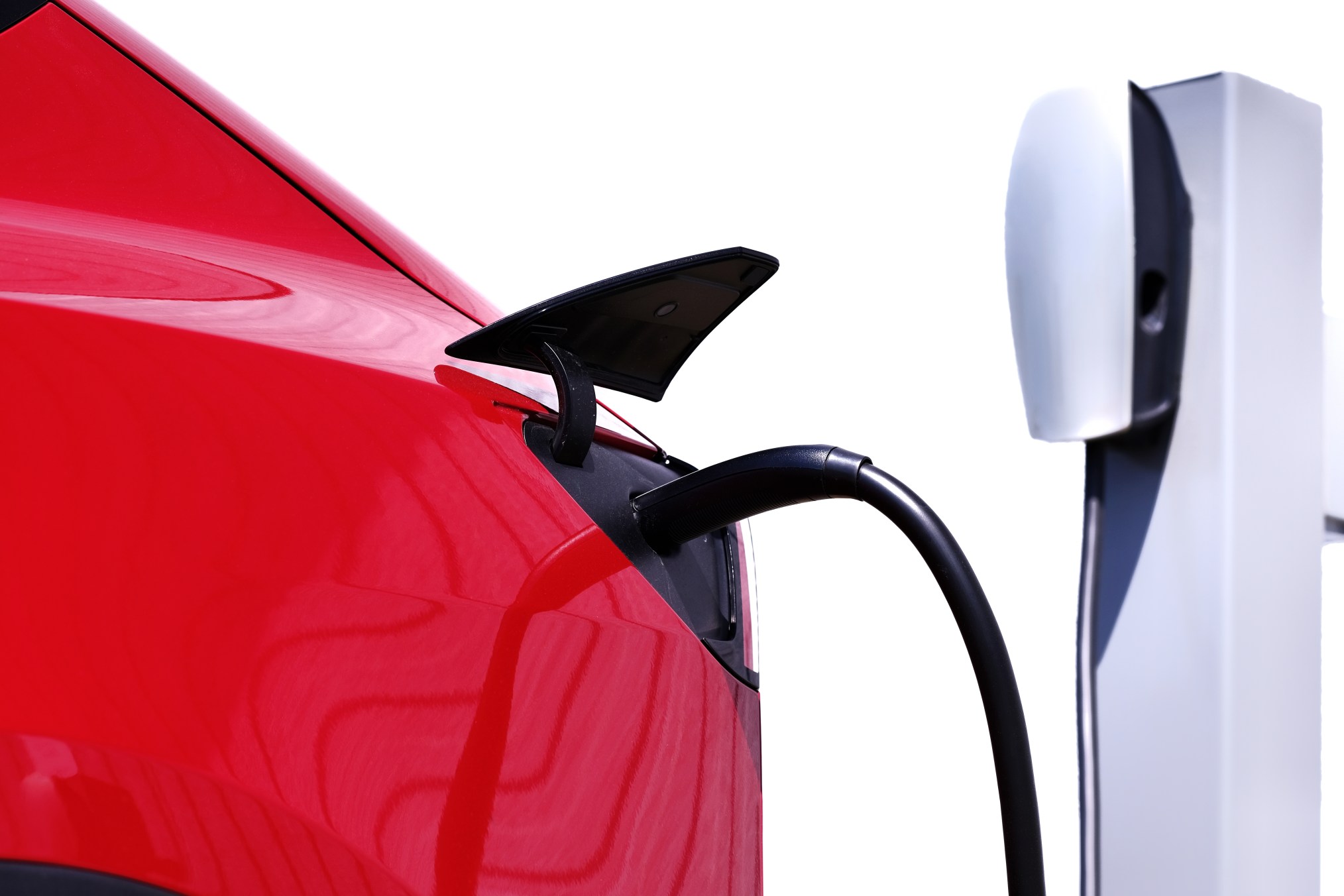
For more than a decade, the biggest financial incentive for buying an electric vehicle in the United States came from the federal government — that changed in 2025. Starting August 2026, California has stepped in with its own program, MyFirstEV, aimed at first-time EV buyers. In this post, I will discuss how the two subsidies compare, what happened to the federal credit, how the state’s replacement works, and what the numbers say about each program’s impact.
What Happened to the Federal EV Tax Credit?
The federal Clean Vehicle Credit (EV tax credit) was created under the Energy Improvement and Extension Act of 2008 and substantially expanded by the 2022 Inflation Reduction Act (IRA). At its peak, it offered up to $7,500 for a new EV or plug-in hybrid and up to $4,000 for a used one, along with a separate commercial vehicle credit worth up to $40,000.[1]
That ended with the One Big Beautiful Bill Act (OBBBA), signed into law on July 4, 2025. The legislation eliminated the new, used, and commercial clean vehicle credits for any vehicle acquired after September 30, 2025, years earlier than the credits’ original 2032 expiration date.[2] Buyers who signed a binding purchase contract and made at least a nominal payment before the cutoff could still claim the credit on their tax return, but for anyone buying after that date, the federal incentive is simply gone. (A separate, smaller credit for home EV charging equipment survived a bit longer, running through June 30, 2026.)[3]
Enter MyFirstEV
California didn’t wait long to fill part of the gap. Signed into law in July 2026 through SB 168 and launched in August, MyFirstEV is a state rebate aimed specifically at Californians buying or leasing their first zero-emission vehicle (ZEV, a category that includes both battery-electric and hydrogen fuel-cell vehicles).
How it works:
$3,500 off a new ZEV with an MSRP of $50,000 or less[4]
$1,750 off a used ZEV priced at $25,000 or less through a manufacturer’s certified pre-owned program[5]
An exception to the price caps for vehicles from participating automakers with a headquarters in California (Rivian and Lucid), those qualify for the rebate regardless of retail price[6]
There is no income cap, and the discount can be stacked with other programs like the Driving Clean Assistance Program and Clean Cars 4 All[7]
Funding: The program totals roughly $271 million, $135.5 million from the state budget, matched dollar-for-dollar by participating automakers.[8] The California Air Resources Board (CARB) estimates that it could support more than 73,000 vehicle transactions.[9]
How to get it: There’s no advance application. Buyers simply go to a participating dealership, sign a document declaring it’s their first EV purchase or lease, and the discount is applied instantly, built directly into the sales contract.[10]
Participating automakers: Hyundai, Lucid, Chevy, Ford, Genesis, Kia, and Rivian were active at launch. Cadillac, Honda, Lexus, Mitsubishi, Subaru, Toyota, and Volvo joined in September 2026, with Nissan expected to follow.[11] Tesla also participated at launch, and its allocation sold out in just four days.[12]
Side-by-Side Comparison
Federal Clean Vehicle Credit (expired)
California MyFirstEV
New vehicle amount
Up to $7,500
$3,500
Used vehicle amount
Up to $4,000
$1,750
Eligibility
Income caps applied; open to repeat EV buyers
No income cap; first-time ZEV buyers only
Price cap (new)
$80,000 (trucks/SUVs), $55,000 (cars)
$50,000 (waived for CA- headquartered automakers)
How you got it
Claimed on a tax return, or (starting 2024) transferred to the dealer as an upfront discount
Instant point-of-sale discount, no tax filing
Geographic scope
Nationwide
California residents only
Status
Ended for vehicles acquired after September 30, 2025
Active as of August 2026, first-come-first-served until funds run out
Program Performance
The federal credit moved a large number of vehicles and a large amount of money. In 2023, its first full year in expanded form, U.S. EV sales rose about 50% year-over-year, and motorists received an estimated $3.3 billion in credits that year alone.[13] After the IRS began allowing buyers to transfer the credit to dealers for an instant discount in January 2024, uptake accelerated quickly: within about five months, the federal government had issued more than $1 billion in upfront credits, with roughly 90% of new-EV buyers choosing the instant-rebate option over waiting to file taxes.[14] More than 100,000 time-of-sale reports had been filed by that summer, including over 15,000 for used vehicles.[15]
The used-vehicle version of the credit saw much lower take-up than the new-vehicle credit, about 28,000 claims in 2023 compared to roughly 488,000 for the new-vehicle credit, which researchers attributed partly to lower awareness and partly to the relatively small pool of qualifying used EVs.[16] A 2024 National Bureau of Economic Research working paper found that, compared with having no credit at all, the IRA’s version generated close to a dollar of economic benefit for every dollar spent.[17]
MyFirstEV is too new to have a comparable performance record, but early signals suggest strong demand relative to its size. The program launched in phases starting August 3, 2026, with Hyundai, Lucid, and Tesla first out of the gate.[18] Funding is split evenly among the participating manufacturers, with half of the funding coming from the state and the other half from the manufacturer. Tesla’s slice of the funding was completely exhausted within four days, with the pace of claims accelerating sharply in the final hours before funds ran out.[19] That kind of rapid depletion suggests real demand among first-time buyers, though it also means the program’s total reach will likely be constrained by funding rather than by eligibility, and CARB has not indicated whether or when it might replenish an automaker’s allocation once it runs out.[20]
The Bottom Line: MyFirstEV is the First Step to Filling the Gap Left by the Federal Government
The federal credit was bigger per vehicle, open to a broader pool of buyers nationwide, over its several years of operation moved billions of dollars and added a meaningful number of additional EV sales. MyFirstEV is smaller in dollar terms and narrower in eligibility (California residents buying their first ZEV only), but it’s built for speed: no tax return, no waiting, money off at the point of sale. MyFirstEV is also designed to increase a new pool of EV owners by specifically targeting first time buyers. The program is also flexible in that it can be stacked with other grants, including income-based grants. Early demand, visible in how quickly Tesla’s initial allocation disappeared, suggests California’s replacement, while more modest, is landing with buyers.
(Note: Original Draft was updated and edited on 3/10/26 and 3/11/26)
On March 9, 2026, the First Appellate District affirmed in full the CPUC’s D.22-12-026 decision in Center for Biological Diversity v. Public Utilities Commission (Case No. A167721). The First Appellate District original opinion affirming the CPUC decision was appealed to the California Supreme Court, which issued an opinion in August 2025 not on the questions specific to the CPUC’s action on NEM 3.0’s net billing tariff and related matters (See CPUC D. 22-12-056; See Proceeding Docket for R. 20-08-020), but on how appellate courts are to apply the judicial review standards found in Public Utilities Code §§ 1757 and 1757.1 to the CPUC. The California Supreme Court remanded the case to the First Appellate District, which again affirmed the CPUC decision for the second time but pursuant to the Yamaha standard the California Supreme Court found was the correct standard of review (you can read my analysis on this opinion here and other blogs about this case here). The following discusses this and other appellate case updates.
Judge’s gavel, Themis sculpture and collection of legal books on the brown background.
(Updated 3/3/26 at 3pm with additional cases)
This post is an update on previous posts (here and here) related to the remanded petition for the Center for Biological Diversity v. Public Utilities Commission of the State of California in the First Appellate District (Case No. A167721).
This is a follow up to my previous blog post on the California Supreme Court’s Opinion that remitted the Center for Biological Diversity v. CPUC (A167721; S283614) to the 1st Appellate District. With supplemental and responsive briefing filed on November 21, 2025 and supplemental responsive briefing due on January 12, 2026, many questions remain related to net billing tariff (NBT) and how it will shape future cases involving a less deferential judicial review standard when CPUC actions are challenged under Public Utilities Code §§ 1757 and 1757.1.
This post will look at two potential inquiries the Court of Appeals may make as it reviews the supplemental briefs and responses:
How will an appellate court apply the Yamaha framework to this case and what can be gleaned for future petitions?
Does Public Utilities Code § 1757 or 1757.1 apply to this case and what guidance will this court provide on petitions under these code sections?
Judge’s gavel, Themis sculpture and collection of legal books on the brown background.
On August 8, 2025, the California Supreme Court issued an opinion (Center for Biological Diversity v. Public Utilities Commission, S284614 (August 7, 2025)) on a single issue of law specific to the degree of deference afforded to the California Public Utilities Commission (CPUC) in interpreting the Public Utilities Code. Specifically, “whether the highly deferential approach of Greyhound continues to apply…” in light of the Legislature’s acts to revise and expand judicial review of CPUC actions as part of the deregulation process of the 1990s under Public Utilities Code §§ 1757 and 1757.1. Previously, the legal analysis of the 1968 Greyhound Lines, Inc. v. Public Utilities Commission was used to grant highly deferential treatment to CPUC decisions at the superior court and appellate levels shielding the CPUC from scrutiny of how it interprets its own statutes, a long held but striking difference from how all other executive branch regulatory agencies are scrutinized by courts because of its constitutional authority and regulation of investor owned public utilities (electric, natural gas, etc.). This opinion will have far-reaching impacts on litigation against the CPUC and will change CPUC administrative adjudications that are now subject to heightened judicial review. This post, the first of two on this topic, will discuss this opinion.
Efficiency energy rating concept. Ecological house with low consumption on renovation with insulation.Sustainable development and eco house
This is Blog #4 on this this topic that will look at two issues. First, where is the line between what is preempted and what is not under the Energy Policy and Conservation Act (EPCA)? This will look at rules of thumb and focus on examples at the state and local level. Second, when local, state, or federal authority to regulate emissions from appliances is used, how is it harmonized with the EPCA and are there potential conflicts? This will look at what authority exists, how it has been used, and discuss the legislative record of the preemption language of the EPCA to discuss how it may interact with the Clean Air Act and state and local authority over air pollution and greenhouse gas (GHG) emissions from appliances. It will examine authority and approaches used by the City of New York, State of California, local air district regulators in California, and two local governments in California.
You can access the Berkeley Decision blog, EPCA Blog # 1 on the lawsuit against the City of Denver and State of Colorado, EPCA Blog #2 on the building performance standards adopted by the City of Denver and State of Colorado, and EPCA Blog #3 on the what the limited case law can tell us about the EPCA and to extent of its preemption.
The deadline for the Governor to sign or vetoes bills passed on September 30th. The Governor has called an extraordinary session where nine bills were introduced. So far, ABX2-1 and ABX2-9 appear to be active while the other seven may or may not move forward. These are primarily focused on oil and gas and refined fuel supply issues.
This session saw major priorities sidelined, withheld, or amended because of the state of the budget. Overall, there were many issues addressed, including:
-CEQA streamlining or exemption bills;
– continued action on pruning the natural gas distribution system;
-support for hydrogen development;
-streamlining and support for transmission development including the deployment of alternative technologies to increase capacity for existing transmissions;
-several bills addressing tracking and studying utility costs and rates paid by ratepayers.
There were also notable vetoes around virtual net metering for multi-family buildings and schools as well as other dealing with budget or administrative limits.
Hot Air balloons float through the sky over the Rio Grande River near Albuquerque, New Mexico, as part of the Albuquerque International Balloon Fiesta.
This blog will continue the discussion on the EPCA specific to two past, unpublished EPCA cases that predate the litigation against the City of Berkeley. The first is a building performance regulation that applied to both existing and new construction in which the City of Albuquerque was enjoined from implementing its code because of EPCA preemption. Second, the State of Washington successfully defended a facial constitutional challenge against its adopted statutory building performance standard for new construction. Both cases evaluated a pre-trial record under the EPCA preemption language of 42 U.S.C. § 6297 that sought injunctions against the adopted building code of each jurisdiction. The different outcomes of these cases can be explained by the type of building energy standard adopted, the then existing case law used to analyze the record by the court, and changes to preemption case law that informed the Berkeley decision.
This blog will then look at how a change in express preemption precedent was essential to the City of Berkeley 9th Circuit opinion and has spurred similar lawsuits against the City of New York and New York State under the same narrative and causes of action as the litigation against the City of Denver and State of Colorado. Discussions of this broader view of preemption will be the focus of a future blog.
You can access the Berkeley Decision blog, EPCA Blog # 1 on the lawsuit against the City of Denver and State of Colorado, and EPCA Blog #2 on the building performance standards adopted by the City of Denver and State of Colorado.
City skyline of Denver Colorado downtown with snowy Rocky Mountains and the City Park Lake.
This is the second blog post in this series looking at the requirements that the State of Colorado and City of Denver adopted to implement building performance standards (Blog # 1 can be accessed here). It will review the benchmarking requirements that determine the scope of the building performance standard through “covered building” definitions that use building type and square footage as parameters. This blog will raise issues on whether and how the Energy Policy and Conservation Act (EPCA) applies to these requirements.
Energy benchmarking is the cornerstone of these regulations to address the energy use and the consequent GHG emission of existing buildings. There is no prohibition to require benchmarking under the EPCA. The following describes the benchmarking requirements.